
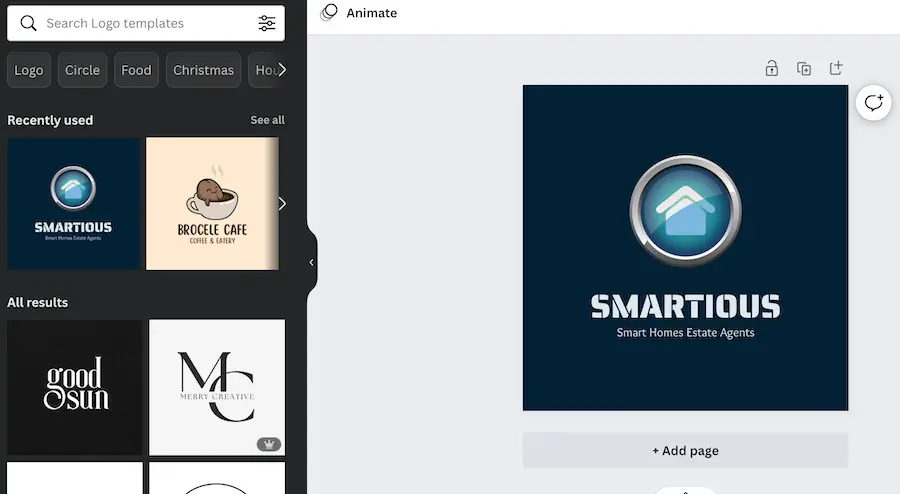
You want to project a professional image for your firm as a business owner. This also entails having a fantastic logo.

Anyone may use the free online design tool Canva to produce stunning graphics. Logos fall under this. Can you use the Canva logo for your company then?
Table of Contents
Can I Use Canva for Logos?
Both YES and NO is the answer. You can design a professional-looking logo for your company with Canva’s free logo builder.
However, you must purchase the logo in order to download and use it.
A one-time charge or a monthly membership are the two payment methods available to users of Canva.
You must pay $65 USD if you choose to pay the one-time cost. You must pay $12.95 USD per month for the membership.
Using the Canva logo for your company has both advantages and disadvantages.
The platform’s ease of use, especially for those without design skills, and affordability as compared to hiring an expert designer are its benefits.
The limitations on downloading and using the logo without spending money and the possibility that the designs might not be as good as if you hired a professional designer are the drawbacks.
Canva Logo Issues
“Canva isn’t worth it; don’t make a corporate logo with it.” Graphic designers frequently hear this caution in forums and conferences about the field.
This situation has been referred to as “risky,” “unprofessional,” and “embarrassing,” among other adjectives.
Even if this free graphic design program is well-liked by inexperienced designers, corporations should not use it since it is not a reliable option.
Here are several reasons not to make your company’s logo using Canva.
Your Logo is Unprofessional
The ideal number of visual components is included in a professional logo to give it a polished and visually pleasant appearance.
Because of Canva’s extreme minimalism, templates seldom contain gradients, textures, or shadows.
Do you ever encounter a logo that seems like it was created by a kindergartener?
That’s because Canva is typically used to generate such logos.
They lack the extra professional design components that would elevate the simplicity of the templates and give them a polished appearance.
And it’s as if you’re sending out a kindergartener to represent your business when your organization builds its logo utilizing templates from this free graphic design program.
When thousands of individuals use the same Canva logo design created using a template, it entirely contradicts the objective of designing a logo, which is to distinguish your own brand and business.
Any company that pays a logo designer will seem unprofessional and incompetent as a result, which is the exact opposite of what they desire.
Using Canva causes complications with graphic design.
Although you might be tempted to use the internet, and free graphic design tools, it’s crucial to keep in mind that things that look too good to be true frequently are.
Canva has been a cheap substitute for graphic artists looking for a simple logo development process, however, this has produced a lot of issues.
Your Logo Lacks Originality
Do you still recall how we claimed a Canva logo isn’t really a logo? This is why.
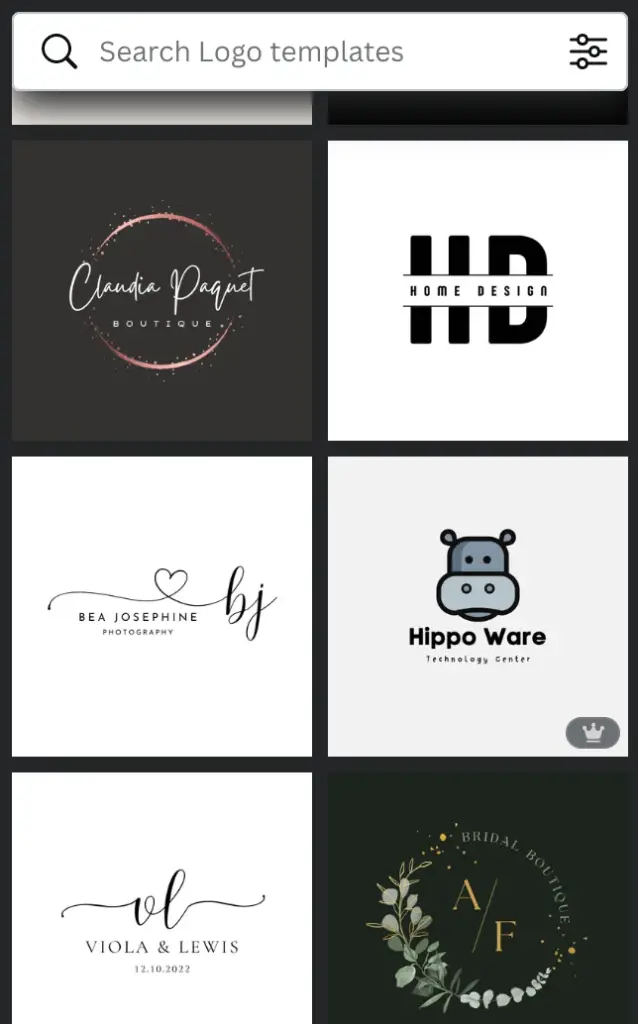
Without much personalization of your own, any of your designs can resemble those of anybody else who may be utilizing the same templates as templates are essentially available to everybody on the earth.
For instance, the templates all have a fairly similar aesthetic.
They often have a flat, minimalist look that doesn’t distinguish or make your brand special.
The identity of your brand is represented by your company’s logo.
If it resembles everyone else, your business won’t stand out as distinctive or expert either.
Your business will be distinctive and stand out with a well-designed logo.
The templates provided by Canva just won’t let you achieve that; instead, they’ll make your logo appear generic.
Limited Font Options
Canva only offers a tiny number of typefaces, some of which are antiquated.
Additionally, the offered typefaces are not well suited for various purposes.
Because they are easy on the eyes, online fonts and sans serif designs, for instance, are frequently preferable over Cambria or Times New Roman.
It’s also challenging for brand consistency, as we’ve discovered the hard way.
If you want to match your brand’s typography to that of your website, it might be challenging because the majority of Canva’s fonts aren’t offered as web fonts.
Limited Options for Customization
Canva lacks several capabilities of Adobe Illustrator, the industry standard, such as the capacity to effectively scale and alter text.
Complex designs are not the greatest fit for Canva.
Canva might not be your first pick if you want a complex logo design with textured backgrounds or symbols with several layers.
Your Logo Cannot Be Trademarked
You won’t be able to trademark your logo if you use Canva, which is one of the main deterrents.
If a word or phrase is unique and not often used, it can be trademarked; nevertheless, if a firm uses this software to create its logo, it runs the danger of also violating the copyright of another company, even if the two are in different industries.
When two logos are put side by side, it might be challenging to tell one from the other due to the minimalist design and style that all Canva designs employ.
It’s challenging, but a skilled logo designer can provide logos with distinctive designs that yet stand out from those of competing businesses.
If you create your logo using Canva, you can later run into legal problems.
Final Thoughts
With Canva’s free logo builder, you can generate a really nice-looking logo, but you can’t download and use it without first paying for it.
The quality of the designs may not be as excellent as if you were to employ a professional designer, even though Canva is a simple tool to use and quite inexpensive compared to paying a designer.
And now you should understand why you should make no effort to use Canva for your company logo.
Don’t use Canva to design a professional logo for your company.
It is challenging for the firm to create high-quality logos that will endure as long as the company does due to its lack of trademarking skills.
Further Reading: